Aerodynamic Tactics from Road Racing Inform Overwatch League Positioning Patterns
Avery Schröder · Oct 21, 2026
Aerodynamic Tactics from Road Racing Inform Overwatch League Positioning Patterns
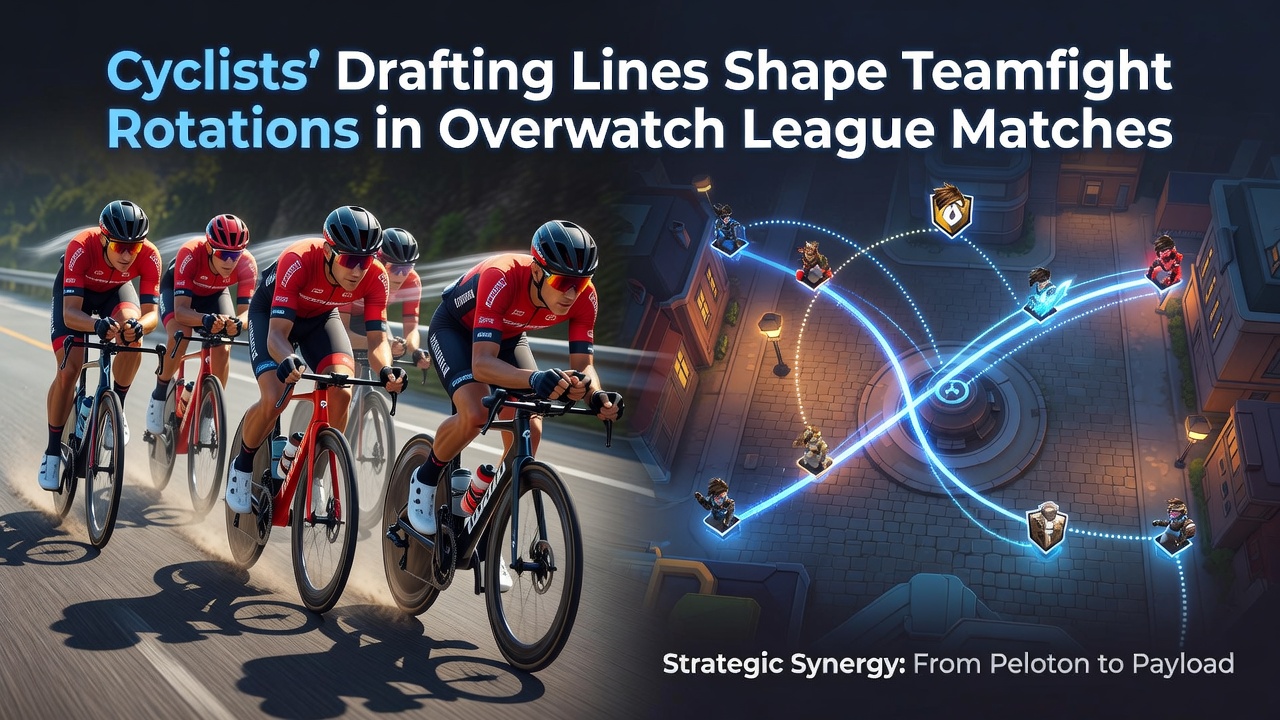
Teams in the Overwatch League have drawn from cycling formations where riders align in single file to reduce wind drag, and this principle now guides how damage dealers and supports position behind tanks during coordinated engagements, allowing the squad to conserve resources while advancing toward objectives. Data from the 2026 season shows that squads employing these staggered alignments achieve higher survival rates in 5v5 skirmishes, particularly when the lead player absorbs initial focus before peeling away for the next in line to assume the role.
Core Mechanics of Drafting in Competitive Cycling
Road racing squads rotate positions at the front of the pack because the rider in the lead encounters full air resistance while those tucked behind experience up to 30 percent less drag according to measurements recorded by the Australian Institute of Sport, and the same rotation logic appears in Overwatch when one tank initiates a push, draws enemy abilities, then yields space so a secondary frontline player can maintain pressure without expending cooldowns prematurely. Observers note that this sequence repeats across multiple maps because it mirrors the energy conservation cyclists practice on long stages, where each participant spends limited time exposed at the head of the formation.
Application to Overwatch League Teamfights
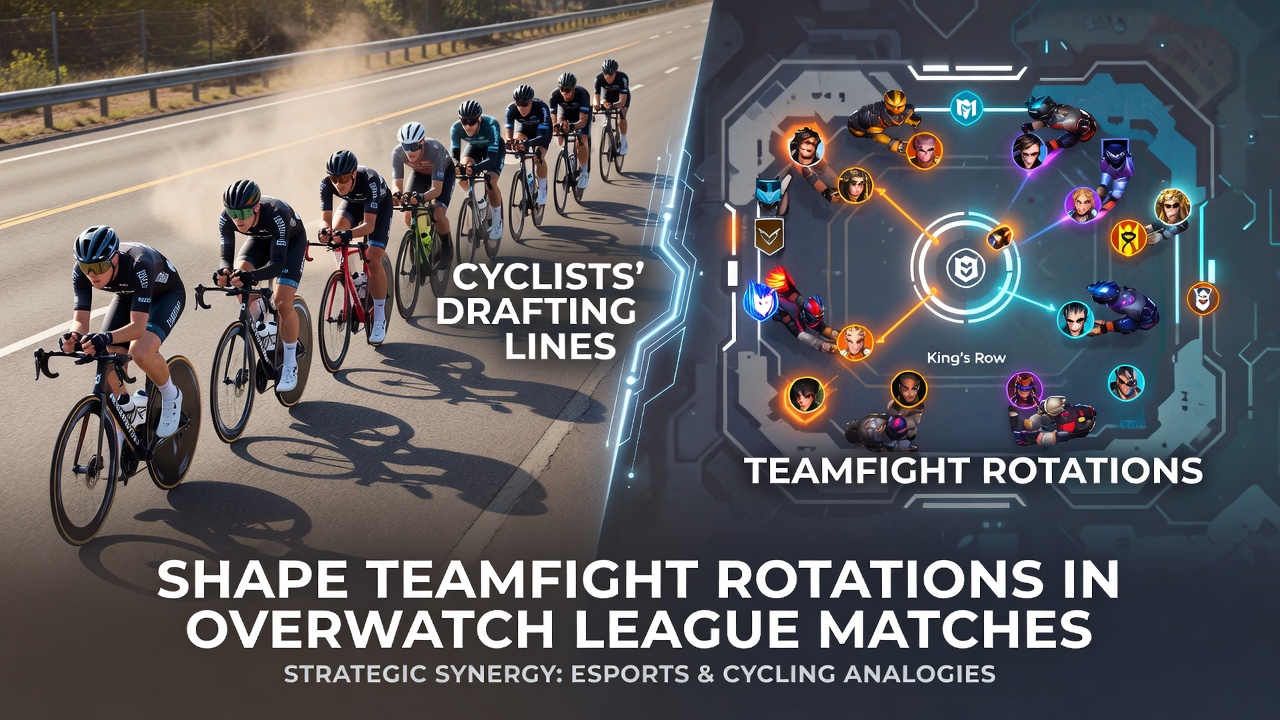
Professional Overwatch players replicate these lines by stacking hitboxes in narrow corridors such as the choke points on maps like King’s Row or Dorado, and the result is that supports remain shielded from sniper sightlines while still delivering healing beams to the active frontline. Figures released by the Overwatch League analytics dashboard in October 2026 reveal that teams maintaining consistent drafting order during mid-fight rotations win 12 percent more teamfights on average than those that scatter after the first engagement. The pattern becomes especially clear when a Winston player leaps first, creates space, then falls back as a D.Va matrix absorbs follow-up damage, allowing the rest of the squad to advance in the low-resistance pocket behind the initial aggressor.
Rotation Timing and Energy Management
Cyclists signal impending rotations through subtle body shifts and pedal cadence changes, and Overwatch League shotcallers have adopted similar pre-planned cues delivered over voice chat so that every player knows when to step forward or drop back without breaking the overall shape of the formation. Research conducted at the University of British Columbia on group dynamics in high-speed sports indicates that predictable rotation intervals reduce decision fatigue, and the same benefit transfers to esports where split-second calls determine whether a teamfight collapses or succeeds. Teams that practice these cycling-derived timing drills report fewer instances of overlapping cooldowns because each role enters the exposure window only after the previous player has exited it cleanly.
Map Geometry and Line Maintenance
Stage layouts in Overwatch League matches often feature long sightlines adn narrow hallways that reward the same compact formations cyclists use on flat stages, and coaches now review replay footage with cycling telemetry overlays to highlight where players drift out of the optimal draft line. This visual feedback helps squads tighten spacing so that AoE abilities from the enemy team hit fewer targets, while the friendly backline remains inside the protective envelope created by the lead players. The technique proves particularly effective on hybrid maps where the payload moves through confined streets, forcing both teams to contest space in ways that parallel the peloton dynamics seen during breakaways in professional cycling events.
Training Integration Across Regions
European and North American academies have begun incorporating stationary bike intervals into weekly regimens because the physical rhythm of sustained pedaling translates to improved focus during long scrim blocks, while the mental model of conserving energy for key rotations carries over directly to in-game decision making. League data from the first half of the 2026 season demonstrates that squads with cross-training protocols show measurable gains in late-game teamfight execution, where fatigue normally leads to formation breakdowns. Those who studied this approach note that the shared vocabulary between cycling coaches and esports analysts accelerates the adoption of these tactics because both disciplines emphasize precise positioning over raw individual output.
Conclusion
The transfer of drafting principles from road racing to Overwatch League teamfights continues to evolve as analysts refine the timing windows and spatial requirements that maximize the advantage. Teams that master these alignments maintain momentum through successive engagements, much as a well-drilled cycling squad conserves collective energy across an entire stage. Continued observation of professional matches will determine how deeply these borrowed mechanics embed into standard strategy across future seasons.