NBA Analytics Frameworks Transforming Role Assignments in Professional League of Legends
Hugo Schmitz · Sep 23, 2026
NBA Analytics Frameworks Transforming Role Assignments in Professional League of Legends
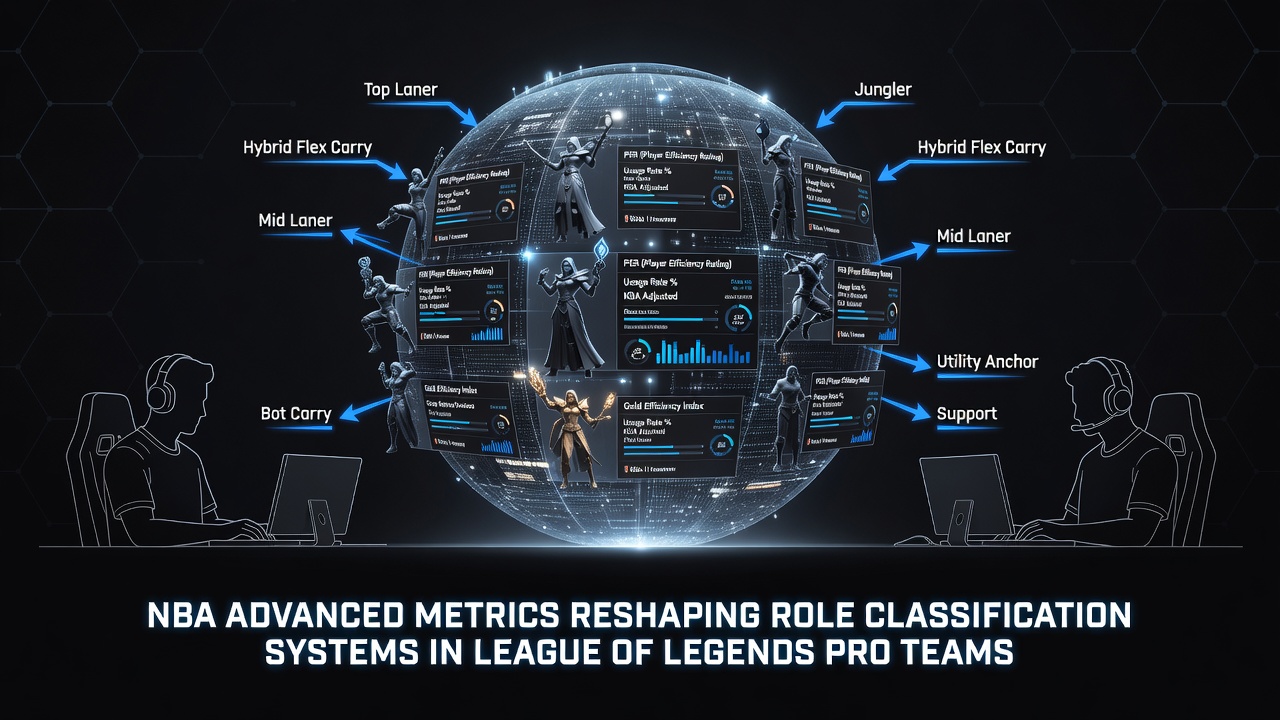
Professional League of Legends organizations have started adapting advanced metrics frameworks originally developed for NBA player evaluation, and these systems now influence how teams classify roles beyond the traditional top, jungle, mid, ADC and support labels. Data from multiple seasons shows that metrics such as adjusted plus-minus models, player efficiency ratings and role-specific contribution scores help identify flex players who deliver value across several positions during matches, while coaches use the same numbers to construct lineups that optimize for map objectives rather than fixed lanes alone.
Core NBA Metrics Entering Esports Workflows
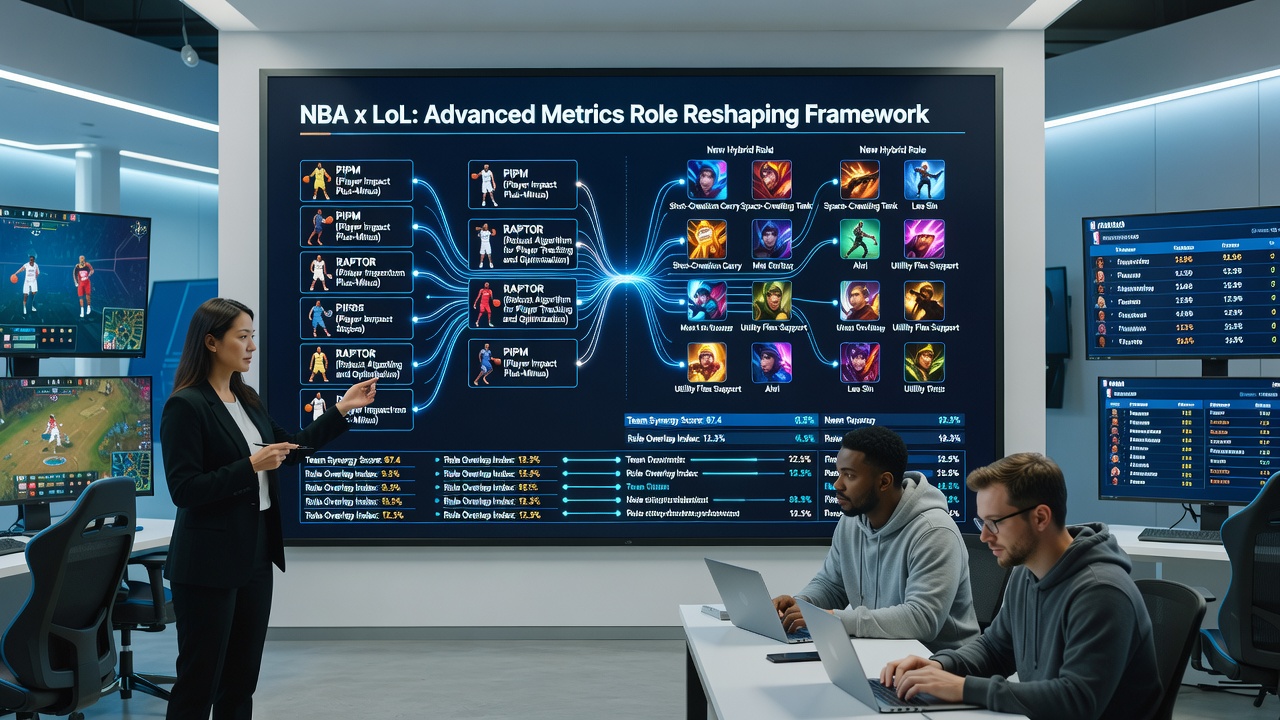
Teams import concepts like real adjusted plus-minus and usage-adjusted efficiency from basketball because those measures isolate individual impact while accounting for teammates and opponents on the court, and analysts translate those methods into League of Legends by tracking gold differential, vision control and objective participation per minute. Research conducted at North American universities demonstrates that applying these adjusted frameworks reveals hidden efficiencies in players previously labeled as specialists, allowing organizations to move away from rigid role silos toward fluid classifications based on measurable output across different game phases.
Data Integration Across Regions and Organizations
European and Asia-Pacific squads have incorporated similar systems through partnerships with analytics platforms that standardize data collection across tournaments, and figures released by the Asia-Pacific Esports Federation indicate a 28 percent rise in cross-role experimentation among starting rosters between 2024 and 2026. Staff members load match logs into dashboards that mirror NBA tracking interfaces, then generate role profiles that highlight which players excel at split-push scenarios or early skirmish setups regardless of their assigned lane. This approach connects individual statistics to team-level outcomes, and it gives coaches clearer pictures of how role fluidity affects win rates in best-of-five series.
Practical Shifts in Scouting and Roster Construction
Scouting departments now evaluate prospects using hybrid scorecards that blend traditional KDA with NBA-derived metrics such as assist-to-vision ratios and expected objective value, while front offices track how these numbers evolve during academy promotions. One organization that implemented the full pipeline reported that its mid-season roster adjustments relied on contribution heatmaps instead of position titles alone, resulting in lineups that rotated players through multiple roles during regular season weeks. Observers note that academies across North America and Europe have begun teaching these classification methods to prospects, and the same data sets help staff forecast how young players will scale when promoted to starting rosters in international competition.
September 2026 Developments and Standardization Efforts
In September 2026 several organizations released updated classification modules that incorporate real-time tracking data from the latest patch cycle, and these tools allow coaching staffs to adjust role assignments between games based on live performance indicators. Industry reports from research groups in Canada and Australia show that teams using the revised frameworks reduced average role-transition errors during playoffs compared with squads that retained legacy position labels, while the same reports document increased collaboration between League of Legends analytics departments and NBA front-office consultants who share methodology without exchanging proprietary data.
Training Implications and Tactical Adjustments
Coaching staffs integrate these metrics into daily practice by assigning players drills that target specific contribution thresholds rather than traditional lane mechanics alone, and players receive feedback reports that compare their efficiency ratings against both historical benchmarks and current opponents. The approach supports more precise macro planning because staff can predict how a player classified as a flex jungler will perform when shifted into a support-adjacent role during late-game sieges, and data sets confirm that such adjustments correlate with higher objective control percentages across professional matches. Organizations continue to refine the models by feeding post-match reviews back into the classification algorithms, which in turn updates role profiles for the following week of competition.
Conclusion
Advanced metrics frameworks from NBA basketball have moved into League of Legends role classification systems through standardized data pipelines, cross-regional partnerships and iterative model updates that reached new milestones in September 2026. Teams now rely on contribution scores and adjusted impact models to define player value across multiple positions, and the resulting role assignments appear in scouting reports, practice plans and in-game decision trees throughout professional circuits.