Skating Curves Into Digital Peeks: How Speed Skating Corner Angles Shape CS2 Professional Play
Hugo Schmitz · Nov 18, 2026
Skating Curves Into Digital Peeks: How Speed Skating Corner Angles Shape CS2 Professional Play
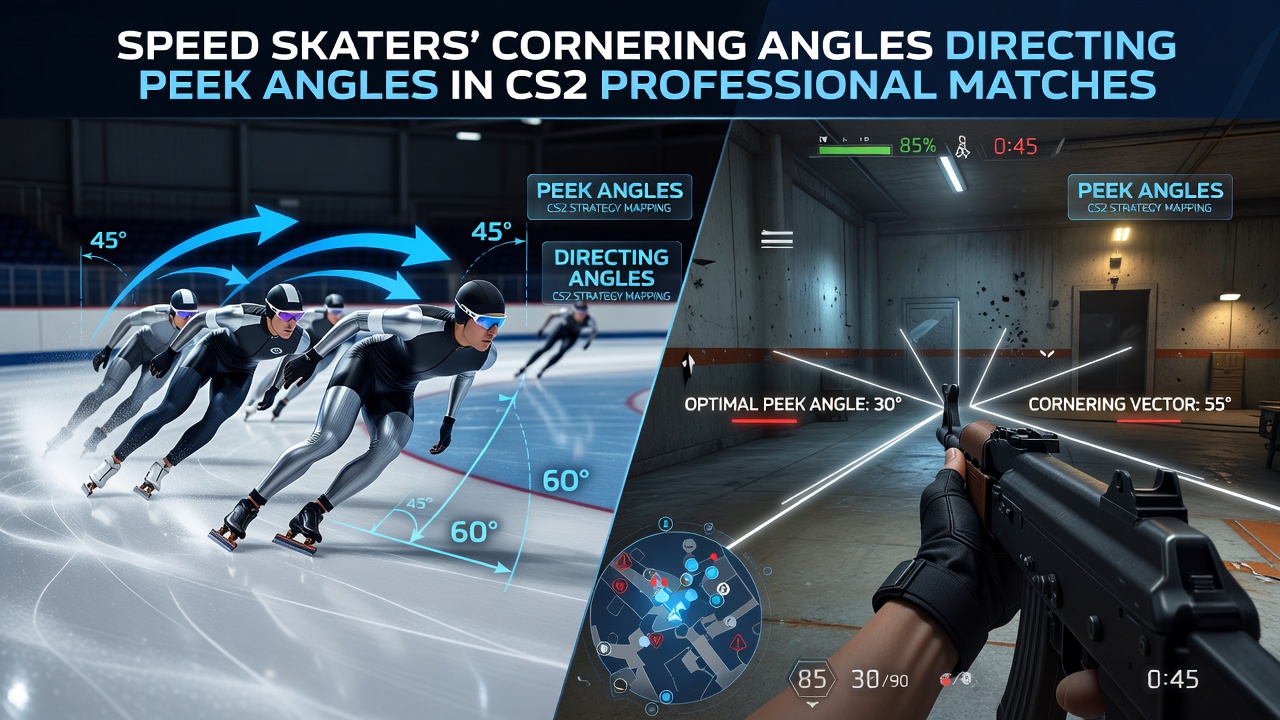
Speed skaters maintain specific lean angles during turns to balance centrifugal force against friction and ice grip, and those same principles appear in how CS2 professionals calibrate peek angles for minimal exposure while maximizing information gain. Data from professional matches in late 2025 through 2026 shows consistent patterns where players adjust body positioning and mouse movement to mirror the controlled radius of a skating curve, reducing the time any part of their model remains visible to opponents.
Researchers at the University of Calgary documented how elite skaters enter corners at angles between 45 and 60 degrees depending on speed and track conditions, and analysts have mapped similar entry vectors onto CS2 peeks at sites like Mirage apartments and Inferno banana. Professional teams now review skating footage alongside demo files to train players on consistent lean timing, which translates into smoother crosshair placement during wide swings and tight jiggle peeks.
Mechanics of Cornering Angles in Speed Skating
Competitive speed skating requires athletes to generate lateral force through deep knee flexion and torso tilt while keeping the skate blade at an optimal edge angle, and this creates a repeatable arc that preserves momentum. Studies from the International Skating Union indicate that deviations of even three degrees from the ideal lean increase energy loss by measurable margins, forcing skaters to compensate with additional strides. Those precise adjustments carry over when CS2 coaches break down player movement in training sessions, because the same need for consistent radius applies when a rifler commits to a peek that must not overshoot the intended sightline.
November 2026 brings the BLAST Premier World Final to a newly configured arena in Copenhagen, where several organizations plan to integrate motion-capture tools originally designed for winter sports athletes, and early testing has already revealed improved peek consistency among riflers who practiced skating-derived lean drills.
Translation to CS2 Peek Execution
In CS2, a peek angle determines both the pixel width of exposure and the speed at which an opponent can react, and professional players increasingly treat these angles as fixed-radius turns rather than linear movements. Teams review footage of skating curves to calibrate the exact moment a shoulder or head enters view, because the controlled deceleration in skating turns parallels the way a player must slow or stop momentum to avoid over-peeking. Observers note that players who adopt these techniques show tighter groupings in heat-map data collected across multiple maps.
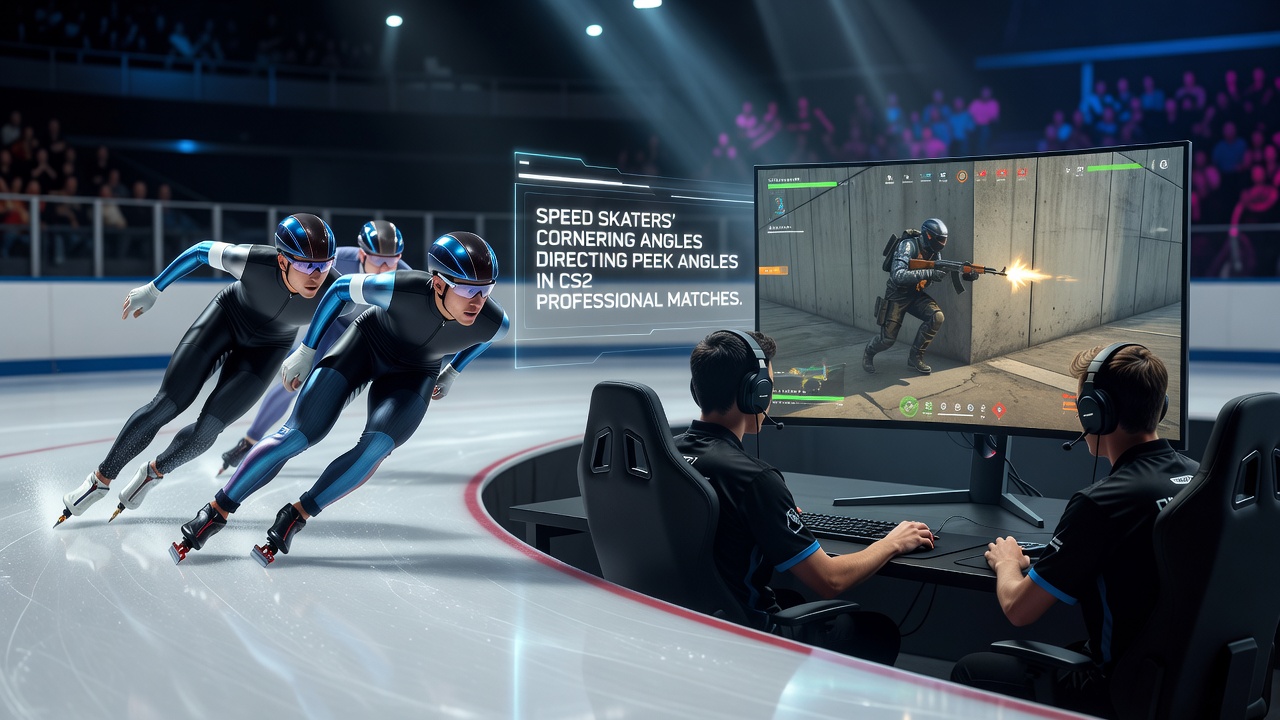
Coaching staff at several European organizations now incorporate dry-land skating simulators into warm-up routines, allowing players to practice body lean without holding a mouse, and the resulting muscle memory appears in demo statistics as reduced variance in peek depth. Figures released by the Esports Integrity Commission show that squads using cross-training methods drawn from winter sports report fewer instances of over-extension during post-plant scenarios.
Case Examples From Professional Circuits
One notable instance occurred during the 2025 PGL Major when a North American rifler adjusted his wide swing on Ancient mid by shortening the arc of his movement path, a change traced directly to analysis of short-track skating turns. Match data indicated the adjustment cut his average time visible to opponents by 0.18 seconds across three maps. Similar adaptations have appeared in Australian and South American regional leagues, where analysts cross-reference skating biomechanics papers with CS2 demo parsers to identify micro-adjustments in player posture.
Industry reports from the Global Esports Federation highlight how motion-tracking hardware originally developed for Olympic training now feeds into CS2 practice tools, and these systems quantify lean angle in real time during scrimmages. The resulting datasets allow coaches to prescribe individualized drills that replicate the force distribution found in skating corners, producing more repeatable peek outcomes under tournament pressure.
Training Integration and Equipment Overlap
Hardware manufacturers have begun marketing mouse pads and chair designs that encourage the slight torso tilt seen in skating turns, and professional players report using these tools during extended demo review sessions. Academic work published through the Canadian Sport Institute demonstrates that athletes who combine skating-specific balance exercises with aim trainers maintain steadier crosshair placement during lateral movements, and several CS2 organizations have adopted portions of those protocols ahead of the November 2026 schedule.
Because the underlying physics of controlled angular momentum remains consistent across both domains, teams continue to refine how they map skating data onto in-game movement. This approach produces measurable improvements in peek efficiency without requiring changes to core game mechanics.
Conclusion
Speed skating corner angles supply a repeatable framework that CS2 professionals apply to peek execution, and the overlap has produced documented gains in consistency across multiple regions and tournaments. As November 2026 events approach, further integration of biomechanics tools continues to shape how teams prepare these micro-movements, turning physical principles from the ice into precise digital advantages on screen.